

Skip to content

LTOU Kaunas

Find your flight


Directional maps


  1. News
Lithuanian Airports’ winter flight schedule: A new route, more European capitals and increased flight frequencies A winter weekend in Prague, a skiing holiday in the French Alps or a getaway to sunny Tenerife – the aviation winter season, starting at Lithuanian Airports on 25 October, will offer a wide range of travel opportunities. The 2026–2027 winter flight schedule will feature a new route to Geneva, returning seasonal flights and more direct connections to European capitals. During the upcoming season, Vilnius Airport will offer 48 scheduled routes, Kaunas Airport 15 and Palanga Airport 6. The total number of scheduled and charter routes across all three airports will reach 77. “Decisions made by individual airlines sometimes lead to hasty conclusions about Lithuania’s overall air connectivity. However, it is important to look at the bigger picture. Lithuania’s gateways to the world are opening wider. This winter season, Vilnius will offer direct flights to 20 European capitals, while flight frequencies to several major European aviation hubs will also increase. Our goal is to ensure that people can travel safely and conveniently, businesses can connect more easily with international partners, and Lithuania becomes increasingly accessible from abroad,” says Minister of Transport and Communications Juras Taminskas. “We are entering this winter season with important developments for passengers – from the new route to Geneva to a wider choice of directly accessible European capitals, including the recently launched Wizz Air flights to Berlin. In addition, compared to last winter, flight frequencies will increase on 15 routes. This means greater flexibility when planning trips, whether for a short business visit or a weekend getaway to a European city,” says Gintarė Norvilaitė-Tautevičė, Acting CEO of Lithuanian Airports. Flight frequencies from Vilnius Airport will increase. Compared to last winter, routes to Warsaw and Helsinki will each gain an average of four additional flights per week, while Copenhagen, Frankfurt, Stockholm and Brussels will each see one additional weekly flight. More flights are also planned from Kaunas Airport, with two additional weekly flights to Edinburgh and one additional weekly flight each to London, Liverpool, Alicante and Stockholm. Flight frequencies to Copenhagen from Palanga Airport will also increase. A new gateway to the Alps via Geneva One of the highlights of the winter season for active holidaymakers will be more opportunities to reach ski resorts in the Alps. Direct flights from Vilnius to Geneva will launch on 2 January 2027. The Swiss city, widely known as an international centre for diplomacy and business, also attracts travellers thanks to its convenient connections to popular ski resorts in France and Switzerland, including the renowned Chamonix resort at the foot of Mont Blanc. The new flights will operate once a week until the end of the ski season in late March. Wizz Air flights to Grenoble, located at the gateway to the French Alps, will also return to the winter schedule. Passengers will continue to have direct connections to Turin in Italy, Zurich in Switzerland and Munich in Germany. Winter holiday options expand with returning flights to Tenerife and Sharm El Sheikh While some travellers head for snow-covered mountains in winter, others look for a chance to escape to warmer destinations. For those planning a winter getaway in the sun, the Lithuanian Airports winter schedule will continue to offer routes to southern Europe and more distant warm-weather destinations. Scheduled flights from Vilnius will connect passengers directly to Barcelona, Malaga, Malta, Larnaca and Dubai. Scheduled flights to Tenerife, the largest of the Canary Islands, known for its mild climate and volcanic landscapes, will also return to the winter schedule. From Kaunas, passengers will be able to choose direct flights to three southern European destinations: Alicante and Malaga in Spain, and Paphos in Cyprus. Charter flights will further expand the range of holiday destinations. From Vilnius, charter services are planned to Antalya in Turkey, Tenerife in Spain, and Hurghada and Sharm El Sheikh in Egypt. Notably, charter flights to the popular resort of Sharm El Sheikh will operate from all three Lithuanian airports this winter. This will be particularly relevant for passengers travelling from Kaunas, as the holiday route returns to Kaunas Airport's schedule following a successful winter season last year. More European capitals within reach – for short breaks and onward journeys This winter season, passengers will be able to fly directly from Vilnius to as many as 20 European capitals, compared to 18 during the previous winter season. Prague and Reykjavik, two European capitals added to Vilnius Airport's route network last summer, will remain on the winter schedule. Prague is an attractive destination for short winter breaks, drawing visitors with its historic Old Town and traditional Christmas markets during the festive season. Meanwhile, direct flights to Reykjavik provide access to Iceland during a period when travellers have the opportunity to witness the Northern Lights. In December, flights to Reykjavik will operate more frequently, three times a week, making it even easier to plan a short getaway to the land of snow and volcanoes. The winter schedule will also retain Wizz Air flights from Vilnius to Gdansk, launched during the summer season. During the Christmas period, Norwegian will operate flights from Palanga to Bergen. This connection is particularly important for people travelling between Lithuania and western Norway during the festive season. Connections to major European aviation hubs remain equally important. Direct flights to Amsterdam, Frankfurt, Helsinki, Copenhagen, Warsaw, Vienna and Zurich allow passengers not only to reach these cities but also to conveniently connect to numerous destinations across Europe and other regions of the world. Overall, air connectivity with European capitals will improve by 11%, while the availability of connecting flights via major European aviation hubs will increase by 8%. The 2026–2027 aviation winter season will run until 27 March 2027. An interactive route map and up-to-date flight information are available on the Lithuanian Airports website.
  1. News
Lithuanian Airports set another all-time record in June as passengers grow by 11% Lithuanian Airports (LTOU) have reported that in June, Vilnius, Kaunas and Palanga airports jointly served almost 742 thousand passengers and set another all-time record. In the first month of the calendar summer, all three airports received record passenger flows which grew by as much as 11 percent compared to June last year. In May, LTOU served almost 735 thousand, in June – the Lithuanian Airports network continued to maintain record growth trends and provided services to 741.8 thousand passengers. This is as much as 11.2 per cent more than in June last year. According to LTOU data, passenger flows in the first half of this year are higher compared to the first half of the previously record-breaking year 2025. Each month of the first half of this year brought new all-time records to Lithuanian Airports. The largest growth in June was achieved by Vilnius Airport – 13.1 per cent. More than 547 thousand passengers chose this airport for their trips. Kaunas Airport also increased its flows significantly (by 6.4 per cent), ensuring comfortable travel for almost 156 thousand passengers. In June, the number of passengers at Palanga Airport also grew, reaching almost 39 thousand. – 4.8 per cent more compared to the same period last year. All three airports not only maintained the growth of passenger traffic in June, but also exceeded the records achieved in the same period last year. "We are glad that June brought another all-time record to Lithuanian Airports. Despite the duration of June – only 30 days, we managed to achieve double-digit growth of 11 percent across the entire network. This means that all six months of this year have set a new record for us, which reflects the unfading desire to travel and get to know the world through new and already popular destinations," says Simonas Bartkus, CEO of Lithuanian Airports. In total, 9.4 percent more flights took place on the LTOU network in June 2026 than in the same month in 2025. In June of this year, LTOU served almost 5.8 thousand. flights, most of them – over 4.2 thousand. – At Vilnius Airport. The number of flights served grew at all three airports in June, while the most significant growth (11.1 per cent) was also recorded at Vilnius Airport.
  1. News
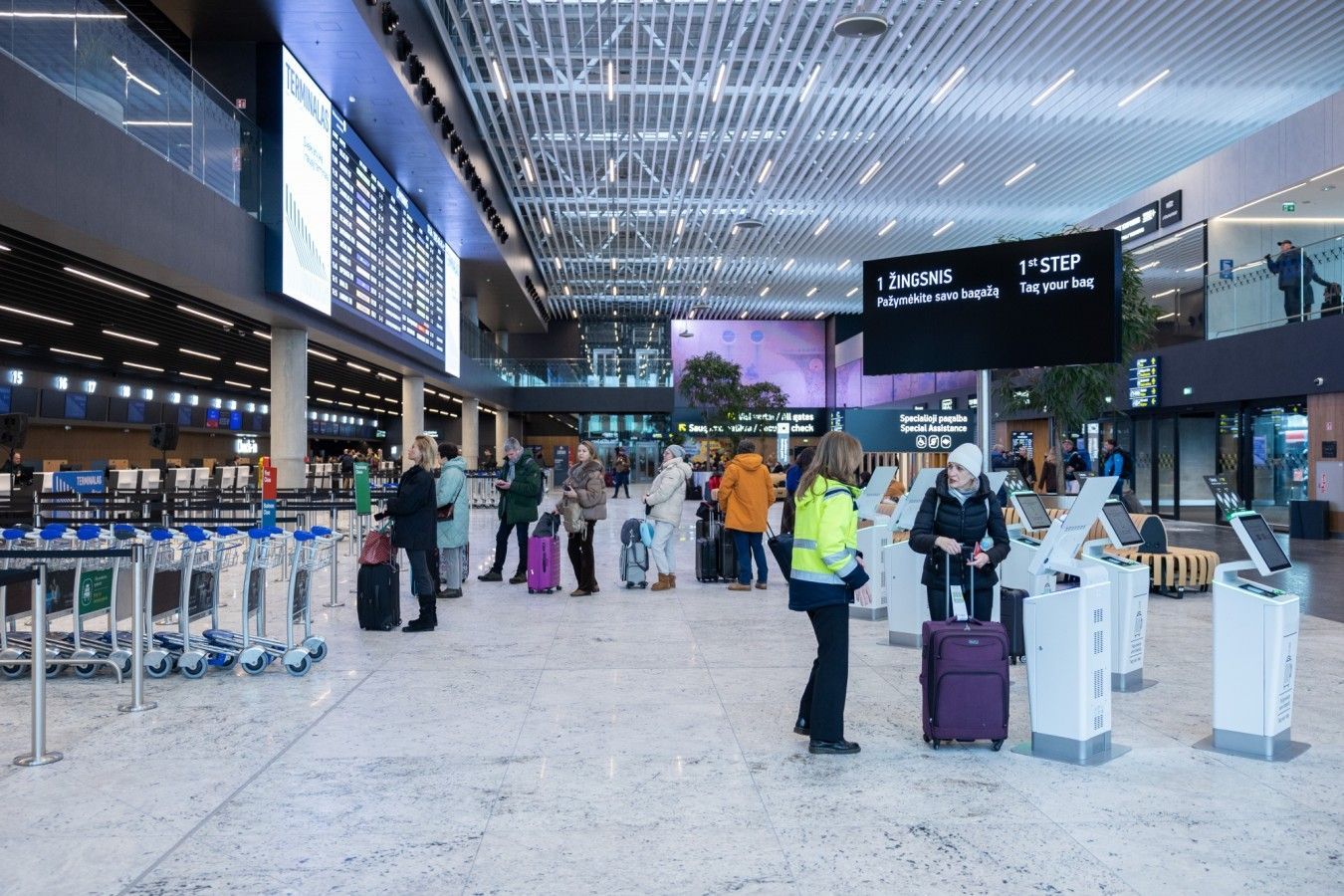
Lithuanian Airports continue to renew as new websites released Lithuanian Airports (LTOU) is starting the summer with the company’s new websites. From now on, the online home of all three airports – Vilnius, Kaunas, and Palanga – is united by a common design, more functions and a smoother browsing experience.   “We are consistently implementing LTOU’s strategy of providing the best passenger experience and offering innovative solutions, so we are pleased to introduce our new airport websites that are designed for smooth and convenient navigation for millions of visitors every year. We are entering a new stage in the digital space, responding to today’s technological needs. I believe that the overall design of all websites and the latest features will allow people to quickly find information, help plan a trip and encourage to use various services provided at the airports,” says Nerilė Mažeikienė, Director of Passenger Experience and Digitalization at Lithuanian Airports.   The airports’ websites have been updated after a seven-year break. N. Mažeikienė notes that during this period, passenger flows have increased significantly, the range of services has expanded, and consumers are becoming more and more proficient in using artificial intelligence tools on mobile devices.   The updated websites meet the highest cybersecurity requirements, and suppliers ensure their uninterrupted availability.   New websites – more convenient, safer and clearer for passengers   Before the flight, there are detailed instructions: from baggage rules and the database of prohibited items to preparation for security checks and information for passengers with individual needs.   Transport solutions:  integrated parking reservation, detailed information about the Kiss & Fly area, intercity and public transport schedules. Passengers will also find information about car-sharing services in this section.   After the flight, a convenient electronic form has been developed for the management of lost items, so that passengers can quickly and easily report their lost property and receive prompt assistance.   The improved flight information module has also become more convenient, where passengers will find all the information related to their flight. After choosing their flight, each passenger will find a complete travel plan, from check-in desks to boarding gates. The module also provides information on how long a passenger will spend on average at individual points of the airport before the flight. In addition, a fast-track service can be purchased here with just a few clicks of a button.   In the flight information module, passengers will find information about the air temperature in the area they are traveling to. A module of prohibited items is also presented: those who doubt whether it is possible to take one or another item on their trip now simply turn on the tool, which provides a clear answer.   Passengers can find all the services offered by Lithuanian Airports in one place by visiting the e-shop.   The direction of improvement is determined by the passenger experience   The new websites of Lithuanian Airports are created not only as information portals, but also as an evolution-oriented platform, in the process of improvement of which passengers themselves are directly involved. According to Mažeikienė, a lot of attention is paid to promoting feedback. For example, on the reviews page, passengers can not only write a text comment, but also interactively tag a specific location on the website that they would like to comment, improve, or report an error they notice.   The digital platform ensures a direct connection with the development team: after submitting your offer and providing an e-mail address, the information reaches the LTOU digital channel development specialists. As a result, the company can proactively and quickly respond to the real needs of passengers and promptly adjust the content or functionality of the website.   “We strive for the passenger to become a co-creator – their real experiences and insights help the team to discover new ideas that might not be noticed during internal processes,” notes N. Mažeikienė and emphasizes that the tool is part of the broader LTOU strategy aimed at ensuring the best passenger experience in the digital space. “Since the new platform is designed in such a way that additional functions can be easily implemented in the future, passenger feedback becomes the main lever when compiling a list of priorities. We want to create a digital home that would be as comfortable as possible for millions of guests,” says the Director of Passenger Experience and Digitalization at LTOU.   Record traffic – also online   LTOU manages four websites – for each of the airports, and a corporate one. Each website is available in two languages – Lithuanian and English. It is estimated that websites are visited an average of two million times a year, and three-quarters of visits are made using mobile devices.   Most often, users look for information about flight schedules, connectivity to the airport, security requirements, and services provided – shops, restaurants, parking, etc.   The website of Vilnius Airport is accessible by links www.vno.lt or www.vilnius-airport.lt, Kaunas Airport – www.kun.lt or www.kaunas-airport.lt, Palanga Airport – www.palanga-airport.lt, Lithuanian Airports – www.ltou.lt.
  1. News
Lithuanian Airports reach yet another passenger record in April In April, passenger flows at Lithuanian Airports (LTOU) continued to grow and exceeded 652 thousand, reaching another all-time monthly record. The first full month of the aviation summer season was active at all three airports – Vilnius, Kaunas and Palanga – which ensure a variety of destinations and convenient air connectivity with important European aviation hubs. Having served 542.2 thousand passengers in March, the network of Lithuanian Airports continued growth trends and provided services to 652.5 thousand passengers in April. According to LTOU, passenger flows in April this year were 8.2 percent higher compared to the previous record in April 2025. “The aviation summer season, which got into full swing in April, brought another all-time record for this month to Lithuanian Airports. Amid geopolitical challenges, route optimisations, airline strikes, and general uncertainty – passenger flows, which continued to grow by a tenth, continued demonstrating the resilience of our market and the unfading desire to travel. I believe that new and returning routes and more frequent flights as the weather warms up will further encourage people to travel by air and get to know the world,” says Simonas Bartkus, CEO of Lithuanian Airports. In total, 3.2 percent more flights took place in the LTOU network in April 2026 than in the same month in 2025. In April of this year, LTOU served almost 5,300 flights. In April, the volume of cargo transported in the LTOU network also grew – almost 1,800 tonnes were transported, or 4.9 per cent more than in the same month last year. A recent study showed that about half (49 percent) of the country’s population is planning at least one trip by aircraft this year. Most of the air travel plans were related to flights to Italy, Spain, the United Kingdom, Greece and Turkey.
  1. News
Lithuanian Airports continue to break records in March In March, passenger flows at Lithuanian Airports (LTOU) continued to grow, and exceeded 542 thousand. March, which is at the turn of the two aviation seasons – winter and summer – showed increased activity at all three airports – Vilnius, Kaunas and Palanga, which ensure a variety of destinations and convenient air connectivity with important European aviation hubs. In March, the Lithuanian Airports network continued to maintain growth trends and provided services to 542.2 thousand passengers. This is 6.7% more than in March last year. According to LTOU, passenger flows in the first quarter of this year are higher compared to the formerly record-breaking first quarter of 2025. As LTOU continues to demonstrate rapid growth, passenger flows in neighbouring markets in March are more moderate: at Riga Airport they fell by 2%, while Tallinn grew by only 2%. The largest growth in March was achieved by Vilnius Airport – 7.8%. More than 377 thousand passengers chose this airport for their trips. Traffic also rose by 5.1% at Palanga Airport, which ensured comfortable travel for 36 thousand passengers in March. The number of passengers at Kaunas Airport reached almost 129 thousand, and was 4.3% higher compared to the same period last year. All three airports not only maintained growth in passenger traffic in March, but also exceeded the records achieved in the same period last year. "We see that, despite the temporary pause of flights to Dubai and Tel Aviv due to the situation in this region, the number of passengers and handled flights continued to grow successfully in the entire Lithuanian Airports network in March. This month marks the beginning of the aviation summer season, so I believe that new and returning routes, more frequent flights, and an expanding route map will cater to the unfading desire to travel", – says Simonas Bartkus, CEO at Lithuanian Airports. In total, 3.7% more flights took place in the LTOU network in March 2026 than in the same month in 2025. In March, LTOU jointly handled almost 4,800 flights. The fastest growth (5.2%) in flights handled was recorded at Vilnius Airport, and amounted to more than 3,400. Kaunas Airport served a little more than a thousand flights and maintained stability compared to March last year. Palanga Airport continues to grow in terms of the number of flights this year, with almost 380 flights, or almost 1% more than compared to March 2025. Figures show that Palanga Airport improves the connectivity of Western Lithuania through Amsterdam, Bergen, London, Oslo, Copenhagen and Riga, and onward connections via respective hubs. The route map for Kaunas Airport for this year’s aviation summer season can be found here.
  1. News
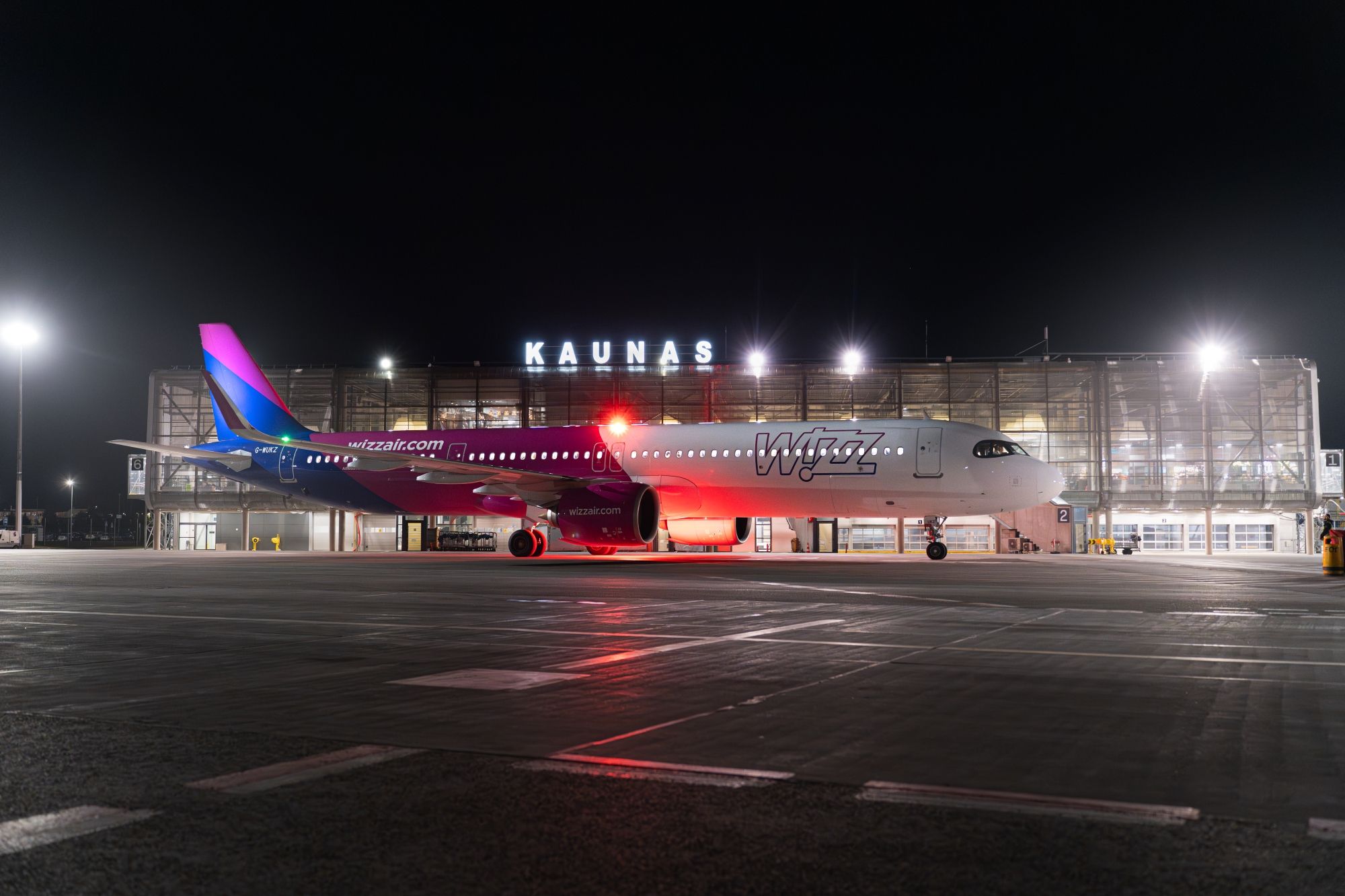
Wizz Air Marks 10 Years of Continuous Operations in Kaunas Wizz Air on Sunday, March 29th, celebrated 10 years of continuous operations at Kaunas Airport, marking a decade of steady presence and contribution to regional connectivity. Over the past ten years, Wizz Air has carried more than 2.1 million passengers and offered over 2.4 million seats from Kaunas. Today, the airline is the second-largest carrier at Kaunas Airport, holding a 7% market share and playing a consistent role in the airport’s development. In 2026, Wizz Air plans to offer more than 100,000 seats from Kaunas, further strengthening its commitment to the region and ensuring continued travel opportunities for passengers. “At Wizz Air, we are proud to celebrate 10 years of continuous operations in Kaunas, reflecting our long-term commitment to Lithuania and the region,” says Salvatore Gabriele Imperiale, Corporate Communications Manager at Wizz Air. “Over the past decade, we have seen steady demand from travellers and a growing need for reliable and affordable connections. We value our partnership with Kaunas Airport and remain focused on maintaining a strong presence while continuing to offer accessible travel opportunities in the years ahead. Let’s WIZZ, Kaunas!” Currently, Wizz Air operates flights from Kaunas to London Luton, providing a direct link between Lithuania and the United Kingdom and supporting both leisure and visiting friends and relatives travel. Kaunas Airport has also seen significant growth during this period, with increasing passenger numbers and expanding connectivity. “Kaunas Airport has grown and changed significantly over the past decade. We thank Wizz Air for being an important part of this story, contributing to better connectivity and more opportunities to travel,” says Gintarė Norvilaitė-Tautevičė, Chief Commercial Officer (CCO) at Lithuanian Airports. “I am certain that as the airport continues to welcome record passenger numbers each year, our long-standing partnership with Wizz Air will not only continue, but also grow.” The 10-year milestone highlights not only Wizz Air’s long-term presence in Kaunas, but also the strong partnership between the airline and Lithuanian Airports, supporting regional mobility and offering passengers convenient travel options. Since launching its first Lithuanian route in 2005, Wizz Air has carried almost 13.5 million passengers to and from Lithuania. Today, the airline operates 24 routes from Lithuania across 18 countries, making business and leisure travel easy, efficient, and accessible for all.
  1. News
Start of the aviation summer season: more frequent flights and 100 destinations from Lithuanian Airports At the end of March, the new summer aviation season begins – offering travelers from Lithuanian airports more frequent flights and new destinations. Airline partners of Lithuanian Airports, operating from Palanga, Kaunas and Vilnius – will offer as many as 100 destinations in 54 countries this year, along with increased flight frequencies to major aviation hubs – providing more convenient connections for those traveling further afield. Planning long-haul trips becomes easier “We are consistently strengthening all three airports in the country – expanding destination choices and making travel increasingly convenient for passengers. We are pleased to see growth not only at Vilnius and Kaunas airports, but also at Palanga Airport, which is steadily establishing itself as an important aviation hub for Western Lithuania. We ensure reliable connections with European countries and open up more opportunities to reach other regions of the world,” says Vice Minister of Transport and Communications Roderikas Žiobakas. “Easily accessible air travel is crucial for people planning trips during the warmer season or holidays. Our partners – airlines – have a strong understanding of travelers’ preferred destinations, as they carefully analyze data and strive to deliver the best possible experience for their passengers. Together with our partners, we aim to increase flight frequencies on routes that are important for Lithuania. Frequent direct flights between Lithuania and key European aviation hubs improve passengers’ ability to plan long-haul journeys – to the Americas, Asia or Africa,” says Simonas Bartkus, CEO of Lithuanian Airports. S. Bartkus also notes that this summer aviation season will see increased flight frequencies to Copenhagen, Frankfurt, Helsinki and Warsaw. On average, there will be 7 daily flights from Lithuania to Copenhagen, 3 to Frankfurt, 4 to Helsinki and 5 to Warsaw. More important developments are expected across the Lithuanian Airports network – connecting Vilnius, Kaunas and Palanga. Kaunas – popular routes and tempting options to Southern Europe The biggest news for travelers flying from Kaunas Airport is airBaltic’s five weekly flights to the Latvian capital Riga – opening up convenient onward connections to nearly 80 destinations across Europe. A flight from Riga to Kaunas on March 29 will mark the start of the summer aviation season in Kaunas and welcome back airBaltic to the airport. Wizz Air will continue operating flights from Kaunas to London Luton Airport. Meanwhile, Ryanair will also maintain flights between Kaunas and Luton, and will increase frequencies to London Stansted. The airline will also offer routes from Kaunas to Dublin, Bristol, Liverpool, Edinburgh and Shannon – making travel to Ireland and the United Kingdom especially convenient during the summer season. Among the most popular warm-weather destinations from Kaunas Airport, S. Bartkus highlights the Greek island of Rhodes and Cyprus, as well as Italian cities such as Bari, Pisa, Pescara, Rimini, Milan and Naples. Passenger flows to Spain will be driven by flights to Madrid, Malaga and Mallorca, along with increased frequencies to Alicante.   From Vilnius – to Iceland and Montenegro Travelers looking for new options should note that new routes are launching from Vilnius – direct scheduled flights to Gdansk in Poland, operated four times per week by Wizz Air, as well as to Podgorica in Montenegro – twice per week, also by Wizz Air. Flights to Gdansk from Vilnius Airport will begin in May, while Podgorica will be launched in early June. Routes are also being resumed to Tirana in Albania – three times per week with Wizz Air, and to Reykjavik in Iceland – twice per week with Wizz Air. Connectivity to Zurich is also improving, with airBaltic launching flights from May 3. This route is already served from Vilnius by SWISS. From Vilnius Airport, more frequent flights to Warsaw will be operated by LOT Polish Airlines, to Copenhagen – by SAS, and to Munich, Prague and Paris – by airBaltic. Finnair plans to increase frequencies to Helsinki, Norwegian – to Oslo, and Lufthansa – to Frankfurt. Most of these increased frequencies will already take effect ahead of Easter – between March 30 and April 5. Ryanair will also increase flight frequencies from Vilnius Airport during the summer season to Frankfurt, Berlin, Athens, Treviso, Milan (Bergamo), Rome and London Stansted. Wizz Air will offer more frequent flights to Barcelona, Dortmund, Budapest, Malaga, Billund and Larnaca. The airline will also continue routes launched during the winter aviation season – to Krakow, Nice, Tallinn and Turku. Connectivity with Tel Aviv will be strengthened by a new carrier – Arkia Israeli Airlines – as well as Israir, which began operations last year. flydubai has scheduled regular flights to Dubai, with this route now becoming a year-round destination – previously available only during the winter season. Summer connectivity with Dubai provides convenient onward connections to more distant destinations, as Dubai is a global aviation hub. Flight schedules to Tel Aviv and Dubai may change due to the evolving situation in the region; the latest information is available on the official websites of the respective airlines.   New in Palanga – flights to Bergen, Norway A key addition for travelers flying from Palanga this summer season is direct flights to Bergen, operated by Norwegian. The airline will also continue flights to the Norwegian capital, Oslo. The first flight to Bergen – on March 31 – will mark the start of the summer aviation season in Palanga. Lithuanian Airports (LTOU) have attracted five carriers to Palanga Airport. During the summer aviation season, airBaltic will operate flights to Riga and Amsterdam, Ryanair – to London Stansted, and SAS – to Copenhagen. Wizz Air is also returning to the airport with flights to Oslo. As the summer aviation season begins, charter flights to Turkey and Egypt – launched last year and met with strong demand – will also continue.   Summing up, S. Bartkus notes that LTOU enters the summer aviation season with a network of 100 destinations across 54 countries from all three airports. This gives travelers a wide range of options for their summer holidays, while making it easier for international visitors to reach Lithuania.
  1. News
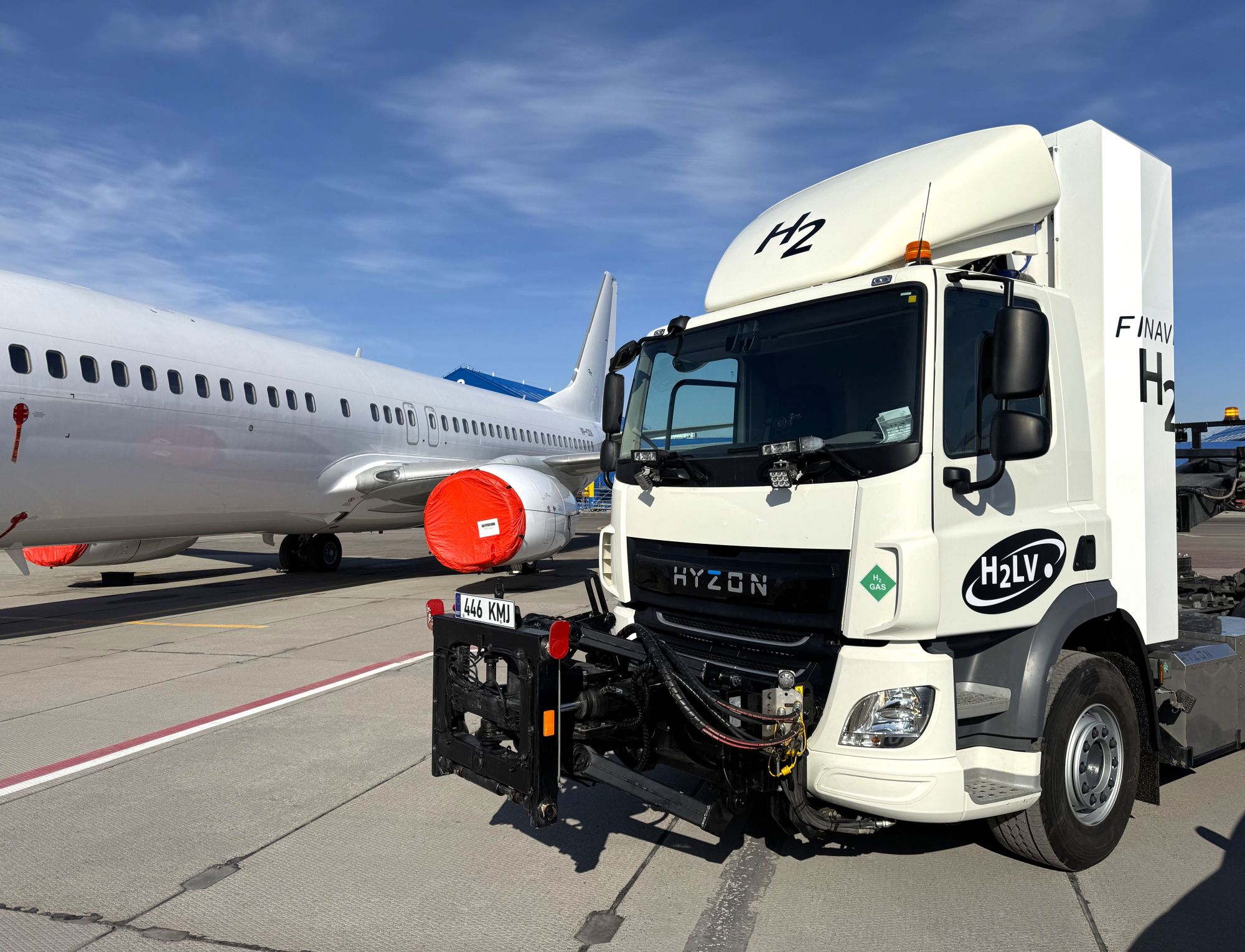
Kaunas Airport tests hydrogen-powered truck Last week, employees and passengers at Kaunas Airport had the chance to see a remarkable vehicle – a hydrogen-powered Hyzon truck. The heavy-duty vehicle maneuvered across the apron without emitting a single gram of CO₂ and handled its tasks with ease. Kaunas Airport is participating in a European Union–funded project aimed at promoting the use of more sustainable fuel – hydrogen – across various types of airport equipment, including specialized vehicles. According to Modestas Alekna, Head of Sustainable Aviation Projects at Lithuanian Airports (LTOU), similar testing is taking place at airports in Helsinki, Riga, and Tallinn, highlighting the region’s openness to innovations and technologies associated with major sustainability shifts in the transport sector. “Ground transport is just as important to airport operations as aircraft. We are active contributors to sustainability-driven change and have embedded green transition goals into our long-term strategy. Green hydrogen is considered a fuel of the future – a clean energy source closely linked to many key renewable energy projects. Testing hydrogen-powered transport, along with the entire Interreg Baltic Sea Region BSR HyAirport project, provides us with valuable experience,” said M. Alekna. The hydrogen-powered Hyzon truck was brought to Kaunas following a pre-prepared testing plan. Specialists operating the 10-ton vehicle confirmed it could be used on the apron, runway and taxiways to remove snow and dust, as well as perform other surface maintenance tasks. According to M. Alekna, hydrogen-powered transport has never before been tested at Lithuanian Airports. Kaunas Airport was chosen due to lower aircraft traffic and suitable space for such trials. The initial goal was to cover around 100 kilometres while carrying out standard apron and runway cleaning tasks, so testing lasted several days. Test locations were selected to ensure that, if the Hyzon vehicle stopped operating, it would not disrupt airport activities. During the trials, the truck operated smoothly and left a positive impression on the specialists. In addition, the mass-produced Toyota Mirai passenger car, also powered entirely by hydrogen, was successfully tested at Kaunas Airport. According to LTOU, only four such vehicles are currently registered in Lithuania. The Toyota Mirai used in the tests was provided by the Latvian Hydrogen Association, which also supplied hydrogen and a refuelling station. The project partner, the Latvian Hydrogen Association, ensured that only fully green hydrogen was used during the tests at Kaunas Airport, a clean fuel that enables zero CO2 emissions when used in vehicles. “Through electrolysis, water molecules are split into oxygen and hydrogen. When electricity generated from solar and wind energy is used in this process, it does not pollute the environment. In other words, such hydrogen is a versatile energy carrier that helps protect the environment,” said M. Alekna, Head of Sustainable Aviation Projects at LTOU. LTOU aims to become a CO2-neutral organisation by 2030. In the European Union’s hydrogen strategy for a climate-neutral Europe, hydrogen plays a key role in achieving climate neutrality by 2050.
1717_28db6ac1034c49fa8cb52afee4545c5c.jpg
  1. News
airBaltic to Increase Frequencies on Key Routes from Lithuania in Summer 2026 The Latvian airline airBaltic will further strengthen its operations in Lithuania for the upcoming summer season 2026 by increasing flight frequencies on several important routes from Vilnius, Kaunas, and Palanga. These improvements reflect rising demand for direct and convenient travel options, supporting stronger connectivity across Europe and beyond for passengers in Lithuania. Next summer, airBaltic will increase frequencies on a number of strategically important routes from Vilnius Airport. Among the key improvements are; Paris (France) increasing from from 5 to 6 weekly flights; Munich (Germany), from 6 to 8; Prague (Czech Republic) and Berlin (Germany) from 2 to 3 weekly services. Additional increases include Malaga (Spain, from 1 to 2 weekly), Nice (France, from 1 to 2 weekly) and Palma de Mallorca (Spain, from 1 to 2 weekly), supporting the growing demand for seasonal leisure travel. Meanwhile, the Palanga–Riga connection will continue to provide reliable access to the wider airBaltic route map, reinforced by improved schedule stability. Mantas Vrubliauskas, Vice President Network Management of airBaltic: “By increasing frequencies on several important routes from Lithuania, we are strengthening our long-term commitment to ensure stable and forward-looking connectivity across the Baltic States. These enhancements, together with a significant seat capacity increase next summer – 21% in Lithuanian market – will improve access to Europe, provide more flexibility for travelers, and support the region’s competitiveness as a whole. The summer 2026 schedule clearly reflects rising demand from Lithuania for reliable and convenient travel options, and our focus remains on meeting that demand through consistent network development.” These frequency increases complement the previously announced new routes for Lithuania, including Vilnius–Zurich and Vilnius–Chisinau, as well as the Kaunas–Riga route, which will operate 5 times per week and provide Lithuanian travelers with seamless one-stop connectivity via Riga on the modern Airbus A220-300 fleet equipped with free, high-speed SpaceX Starlink internet. In total, during the summer 2026 season, airBaltic will connect Vilnius, Kaunas, and Palanga to more than 20 direct destinations, while also offering smooth onward connections to over 80 destinations across its wider network. Across all its bases, airBaltic will operate over 110 routes next summer, continuing its steady expansion and reinforcing its role as the leading airline in the Baltic region. Over the past 30 years, airBaltic has evolved into a globally respected carrier. Now the airline is connecting the Baltic States to 80 destinations across Europe, the Middle East, North Africa, and the Caucasus region, providing essential infrastructure and global connectivity for the region. A complete schedule of airBaltic flights and tickets are available on the company's homepage at www.airbaltic.com