Choose an airport
Vilnius airport (VNO)
Kaunas airport (KUN)
Palanga airport (PLQ)
Lithuanian Airports (LTOU)
About company
Passengers
For business
Search
Accessibility
EN
LT
EN
LTOU Kaunas
Flights
Flight schedule
Directions and carriers
Aircraft traffic
Before flight
Check-in and baggage
Security check
Border and customs inspection
Passengers with children
Special assistance
Transportation
Car parks
Public transport
Taxi
Car rental
Car sharing
Services
Shops and restaurants
Hotel
Internet at the airport
Ticket desks
Tax refund
ATMs
After flight
Lost or damaged baggage
Lost items
Border and customs inspection
Career
Search
Menu
close
Search for information
All search results
Search
Search
close
Search for information on the page using the search field at the top
All search results
Passengers
For business
Flights
Flights
Flight schedule
Directions and carriers
Aircraft traffic
Before flight
Before flight
Check-in and baggage
Security check
Border and customs inspection
Passengers with children
Special assistance
Transportation
Transportation
Car parks
Public transport
Taxi
Car rental
Car sharing
Services
Services
Shops and restaurants
Hotel
Internet at the airport
Ticket desks
Tax refund
ATMs
After flight
After flight
Lost or damaged baggage
Lost items
Border and customs inspection
Career
Aviation services
Aviation services
General conditions
Airport charges and general conditions
Route development
Flight statistics and cargo
Aircraft maintenance (MRO)
Directional maps
Ground handling
Procedure for providing passenger data
Useful information and links
PPR
Business services
Business services
Rental Tenders
Advertising at airports
Commercial filming and photography
Passenger surveys
Taxi services
Guest Welcome and Farewell Service
Baltic Aviation Hub
Career
Find your flight
Search
Departs
Arrives
Travel light
Before flight
Transportation
After flight
Security check
Check-in and baggage
Special assistance
Border and customs inspection
Passengers with children
All services
Security check
Check-in and baggage
Special assistance
Border and customs inspection
Passengers with children
All services
Taxi
Car parks
Public transport
Intercity and international transport
Car rental
All services
Taxi
Car parks
Public transport
Intercity and international transport
Car rental
All services
Lost items
Lost or damaged baggage
Border and customs inspection
All services
Lost items
Lost or damaged baggage
Border and customs inspection
All services
News
All news
Lithuanian Airports reach yet another passenger record in April
News
Lithuanian Airports reach yet another passenger record in April
In April, passenger flows at Lithuanian Airports (LTOU) continued to grow and exceeded 652 thousand, reaching another all-time monthly record. The first full month of the aviation summer season was active at all three airports – Vilnius, Kaunas and Palanga – which ensure a variety of destinations and convenient air connectivity with important European aviation hubs. Having served 542.2 thousand passengers in March, the network of Lithuanian Airports continued growth trends and provided services to 652.5 thousand passengers in April. According to LTOU, passenger flows in April this year were 8.2 percent higher compared to the previous record in April 2025. “The aviation summer season, which got into full swing in April, brought another all-time record for this month to Lithuanian Airports. Amid geopolitical challenges, route optimisations, airline strikes, and general uncertainty – passenger flows, which continued to grow by a tenth, continued demonstrating the resilience of our market and the unfading desire to travel. I believe that new and returning routes and more frequent flights as the weather warms up will further encourage people to travel by air and get to know the world,” says Simonas Bartkus, CEO of Lithuanian Airports. In total, 3.2 percent more flights took place in the LTOU network in April 2026 than in the same month in 2025. In April of this year, LTOU served almost 5,300 flights. In April, the volume of cargo transported in the LTOU network also grew – almost 1,800 tonnes were transported, or 4.9 per cent more than in the same month last year. A recent study showed that about half (49 percent) of the country’s population is planning at least one trip by aircraft this year. Most of the air travel plans were related to flights to Italy, Spain, the United Kingdom, Greece and Turkey.
2026 05 05
More
Lithuanian Airports reach yet another passenger record in April
Lithuanian Airports continue to break records in March
News
Lithuanian Airports continue to break records in March
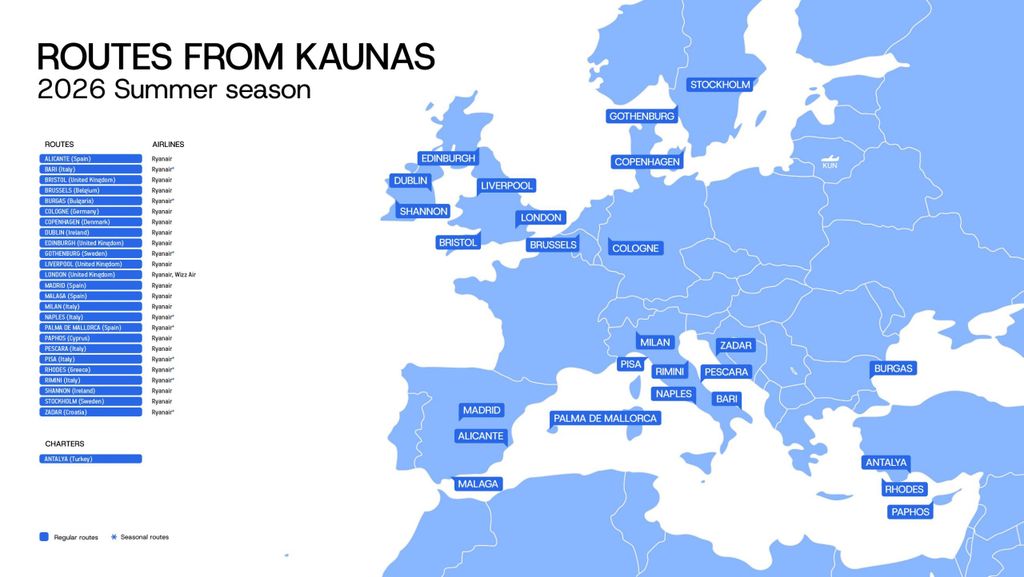
In March, passenger flows at Lithuanian Airports (LTOU) continued to grow, and exceeded 542 thousand. March, which is at the turn of the two aviation seasons – winter and summer – showed increased activity at all three airports – Vilnius, Kaunas and Palanga, which ensure a variety of destinations and convenient air connectivity with important European aviation hubs. In March, the Lithuanian Airports network continued to maintain growth trends and provided services to 542.2 thousand passengers. This is 6.7% more than in March last year. According to LTOU, passenger flows in the first quarter of this year are higher compared to the formerly record-breaking first quarter of 2025. As LTOU continues to demonstrate rapid growth, passenger flows in neighbouring markets in March are more moderate: at Riga Airport they fell by 2%, while Tallinn grew by only 2%. The largest growth in March was achieved by Vilnius Airport – 7.8%. More than 377 thousand passengers chose this airport for their trips. Traffic also rose by 5.1% at Palanga Airport, which ensured comfortable travel for 36 thousand passengers in March. The number of passengers at Kaunas Airport reached almost 129 thousand, and was 4.3% higher compared to the same period last year. All three airports not only maintained growth in passenger traffic in March, but also exceeded the records achieved in the same period last year. "We see that, despite the temporary pause of flights to Dubai and Tel Aviv due to the situation in this region, the number of passengers and handled flights continued to grow successfully in the entire Lithuanian Airports network in March. This month marks the beginning of the aviation summer season, so I believe that new and returning routes, more frequent flights, and an expanding route map will cater to the unfading desire to travel", – says Simonas Bartkus, CEO at Lithuanian Airports. In total, 3.7% more flights took place in the LTOU network in March 2026 than in the same month in 2025. In March, LTOU jointly handled almost 4,800 flights. The fastest growth (5.2%) in flights handled was recorded at Vilnius Airport, and amounted to more than 3,400. Kaunas Airport served a little more than a thousand flights and maintained stability compared to March last year. Palanga Airport continues to grow in terms of the number of flights this year, with almost 380 flights, or almost 1% more than compared to March 2025. Figures show that Palanga Airport improves the connectivity of Western Lithuania through Amsterdam, Bergen, London, Oslo, Copenhagen and Riga, and onward connections via respective hubs. The route map for Kaunas Airport for this year’s aviation summer season can be found here.
2026 04 03
More
Lithuanian Airports continue to break records in March
Wizz Air Marks 10 Years of Continuous Operations in Kaunas
News
Wizz Air Marks 10 Years of Continuous Operations in Kaunas
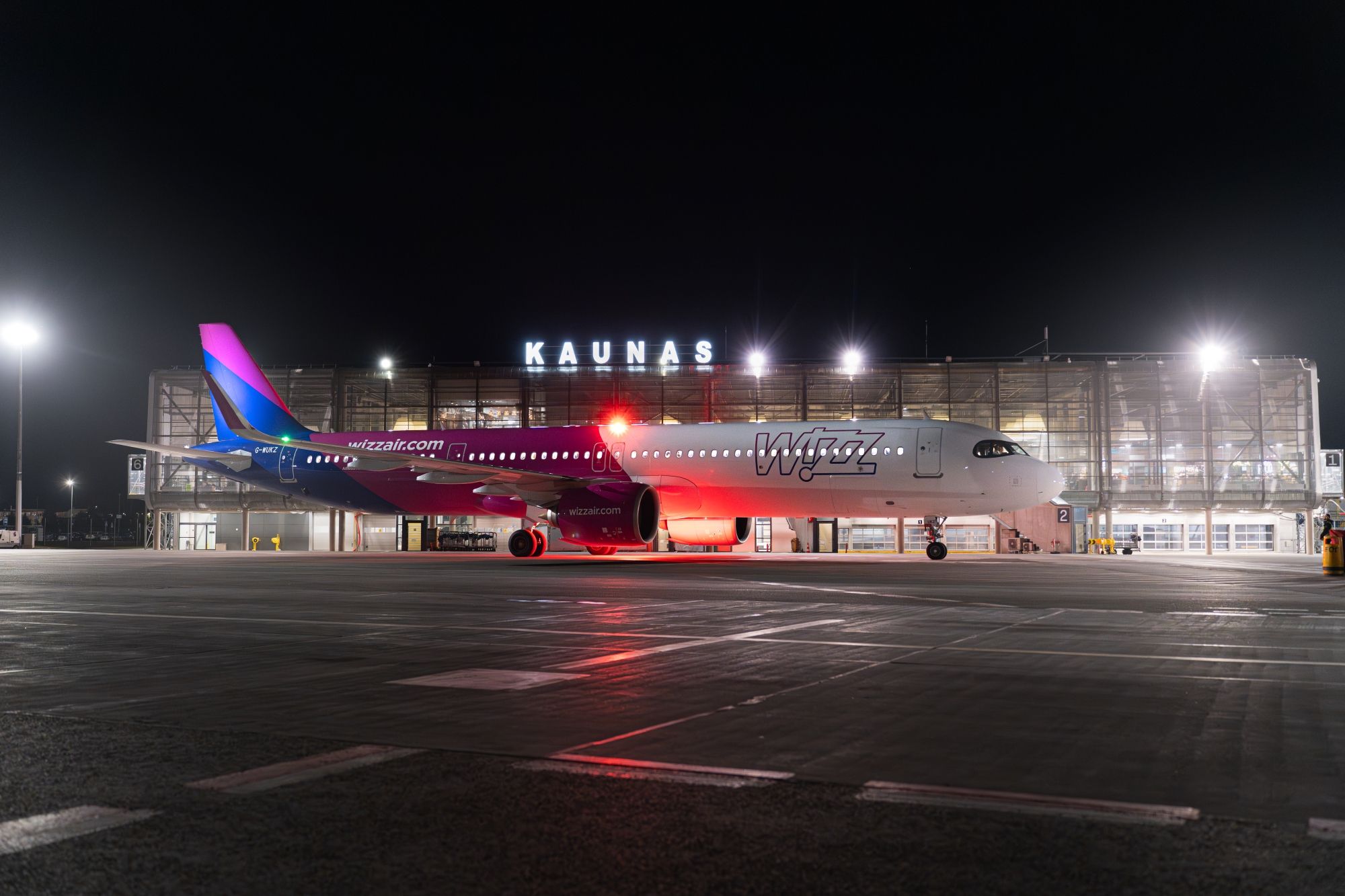
Wizz Air on Sunday, March 29th, celebrated 10 years of continuous operations at Kaunas Airport, marking a decade of steady presence and contribution to regional connectivity. Over the past ten years, Wizz Air has carried more than 2.1 million passengers and offered over 2.4 million seats from Kaunas. Today, the airline is the second-largest carrier at Kaunas Airport, holding a 7% market share and playing a consistent role in the airport’s development. In 2026, Wizz Air plans to offer more than 100,000 seats from Kaunas, further strengthening its commitment to the region and ensuring continued travel opportunities for passengers. “At Wizz Air, we are proud to celebrate 10 years of continuous operations in Kaunas, reflecting our long-term commitment to Lithuania and the region,” says Salvatore Gabriele Imperiale, Corporate Communications Manager at Wizz Air. “Over the past decade, we have seen steady demand from travellers and a growing need for reliable and affordable connections. We value our partnership with Kaunas Airport and remain focused on maintaining a strong presence while continuing to offer accessible travel opportunities in the years ahead. Let’s WIZZ, Kaunas!” Currently, Wizz Air operates flights from Kaunas to London Luton, providing a direct link between Lithuania and the United Kingdom and supporting both leisure and visiting friends and relatives travel. Kaunas Airport has also seen significant growth during this period, with increasing passenger numbers and expanding connectivity. “Kaunas Airport has grown and changed significantly over the past decade. We thank Wizz Air for being an important part of this story, contributing to better connectivity and more opportunities to travel,” says Gintarė Norvilaitė-Tautevičė, Chief Commercial Officer (CCO) at Lithuanian Airports. “I am certain that as the airport continues to welcome record passenger numbers each year, our long-standing partnership with Wizz Air will not only continue, but also grow.” The 10-year milestone highlights not only Wizz Air’s long-term presence in Kaunas, but also the strong partnership between the airline and Lithuanian Airports, supporting regional mobility and offering passengers convenient travel options. Since launching its first Lithuanian route in 2005, Wizz Air has carried almost 13.5 million passengers to and from Lithuania. Today, the airline operates 24 routes from Lithuania across 18 countries, making business and leisure travel easy, efficient, and accessible for all.
2026 03 30
More
Wizz Air Marks 10 Years of Continuous Operations in Kaunas
Start of the aviation summer season: more frequent flights and 100 destinations from Lithuanian Airports
News
Start of the aviation summer season: more frequent flights and 100 destinations from Lithuanian Airports
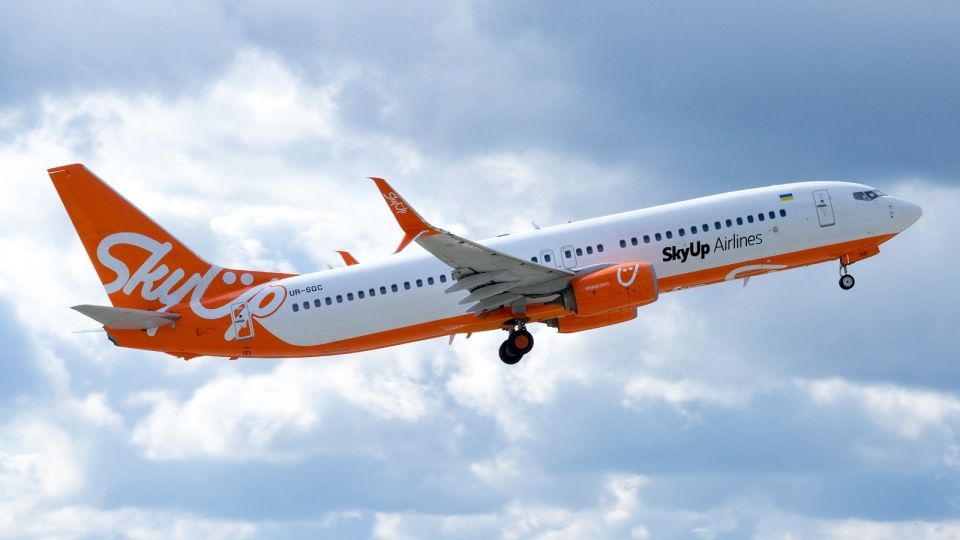
At the end of March, the new summer aviation season begins – offering travelers from Lithuanian airports more frequent flights and new destinations. Airline partners of Lithuanian Airports, operating from Palanga, Kaunas and Vilnius – will offer as many as 100 destinations in 54 countries this year, along with increased flight frequencies to major aviation hubs – providing more convenient connections for those traveling further afield. Planning long-haul trips becomes easier “We are consistently strengthening all three airports in the country – expanding destination choices and making travel increasingly convenient for passengers. We are pleased to see growth not only at Vilnius and Kaunas airports, but also at Palanga Airport, which is steadily establishing itself as an important aviation hub for Western Lithuania. We ensure reliable connections with European countries and open up more opportunities to reach other regions of the world,” says Vice Minister of Transport and Communications Roderikas Žiobakas. “Easily accessible air travel is crucial for people planning trips during the warmer season or holidays. Our partners – airlines – have a strong understanding of travelers’ preferred destinations, as they carefully analyze data and strive to deliver the best possible experience for their passengers. Together with our partners, we aim to increase flight frequencies on routes that are important for Lithuania. Frequent direct flights between Lithuania and key European aviation hubs improve passengers’ ability to plan long-haul journeys – to the Americas, Asia or Africa,” says Simonas Bartkus, CEO of Lithuanian Airports. S. Bartkus also notes that this summer aviation season will see increased flight frequencies to Copenhagen, Frankfurt, Helsinki and Warsaw. On average, there will be 7 daily flights from Lithuania to Copenhagen, 3 to Frankfurt, 4 to Helsinki and 5 to Warsaw. More important developments are expected across the Lithuanian Airports network – connecting Vilnius, Kaunas and Palanga. Kaunas – popular routes and tempting options to Southern Europe The biggest news for travelers flying from Kaunas Airport is airBaltic’s five weekly flights to the Latvian capital Riga – opening up convenient onward connections to nearly 80 destinations across Europe. A flight from Riga to Kaunas on March 29 will mark the start of the summer aviation season in Kaunas and welcome back airBaltic to the airport. Wizz Air will continue operating flights from Kaunas to London Luton Airport. Meanwhile, Ryanair will also maintain flights between Kaunas and Luton, and will increase frequencies to London Stansted. The airline will also offer routes from Kaunas to Dublin, Bristol, Liverpool, Edinburgh and Shannon – making travel to Ireland and the United Kingdom especially convenient during the summer season. Among the most popular warm-weather destinations from Kaunas Airport, S. Bartkus highlights the Greek island of Rhodes and Cyprus, as well as Italian cities such as Bari, Pisa, Pescara, Rimini, Milan and Naples. Passenger flows to Spain will be driven by flights to Madrid, Malaga and Mallorca, along with increased frequencies to Alicante. From Vilnius – to Iceland and Montenegro Travelers looking for new options should note that new routes are launching from Vilnius – direct scheduled flights to Gdansk in Poland, operated four times per week by Wizz Air, as well as to Podgorica in Montenegro – twice per week, also by Wizz Air. Flights to Gdansk from Vilnius Airport will begin in May, while Podgorica will be launched in early June. Routes are also being resumed to Tirana in Albania – three times per week with Wizz Air, and to Reykjavik in Iceland – twice per week with Wizz Air. Connectivity to Zurich is also improving, with airBaltic launching flights from May 3. This route is already served from Vilnius by SWISS. From Vilnius Airport, more frequent flights to Warsaw will be operated by LOT Polish Airlines, to Copenhagen – by SAS, and to Munich, Prague and Paris – by airBaltic. Finnair plans to increase frequencies to Helsinki, Norwegian – to Oslo, and Lufthansa – to Frankfurt. Most of these increased frequencies will already take effect ahead of Easter – between March 30 and April 5. Ryanair will also increase flight frequencies from Vilnius Airport during the summer season to Frankfurt, Berlin, Athens, Treviso, Milan (Bergamo), Rome and London Stansted. Wizz Air will offer more frequent flights to Barcelona, Dortmund, Budapest, Malaga, Billund and Larnaca. The airline will also continue routes launched during the winter aviation season – to Krakow, Nice, Tallinn and Turku. Connectivity with Tel Aviv will be strengthened by a new carrier – Arkia Israeli Airlines – as well as Israir, which began operations last year. flydubai has scheduled regular flights to Dubai, with this route now becoming a year-round destination – previously available only during the winter season. Summer connectivity with Dubai provides convenient onward connections to more distant destinations, as Dubai is a global aviation hub. Flight schedules to Tel Aviv and Dubai may change due to the evolving situation in the region; the latest information is available on the official websites of the respective airlines. New in Palanga – flights to Bergen, Norway A key addition for travelers flying from Palanga this summer season is direct flights to Bergen, operated by Norwegian. The airline will also continue flights to the Norwegian capital, Oslo. The first flight to Bergen – on March 31 – will mark the start of the summer aviation season in Palanga. Lithuanian Airports (LTOU) have attracted five carriers to Palanga Airport. During the summer aviation season, airBaltic will operate flights to Riga and Amsterdam, Ryanair – to London Stansted, and SAS – to Copenhagen. Wizz Air is also returning to the airport with flights to Oslo. As the summer aviation season begins, charter flights to Turkey and Egypt – launched last year and met with strong demand – will also continue. Summing up, S. Bartkus notes that LTOU enters the summer aviation season with a network of 100 destinations across 54 countries from all three airports. This gives travelers a wide range of options for their summer holidays, while making it easier for international visitors to reach Lithuania.
2026 03 23
More
Start of the aviation summer season: more frequent flights and 100 destinations from Lithuanian Airports
Kaunas Airport tests hydrogen-powered truck
News
Kaunas Airport tests hydrogen-powered truck
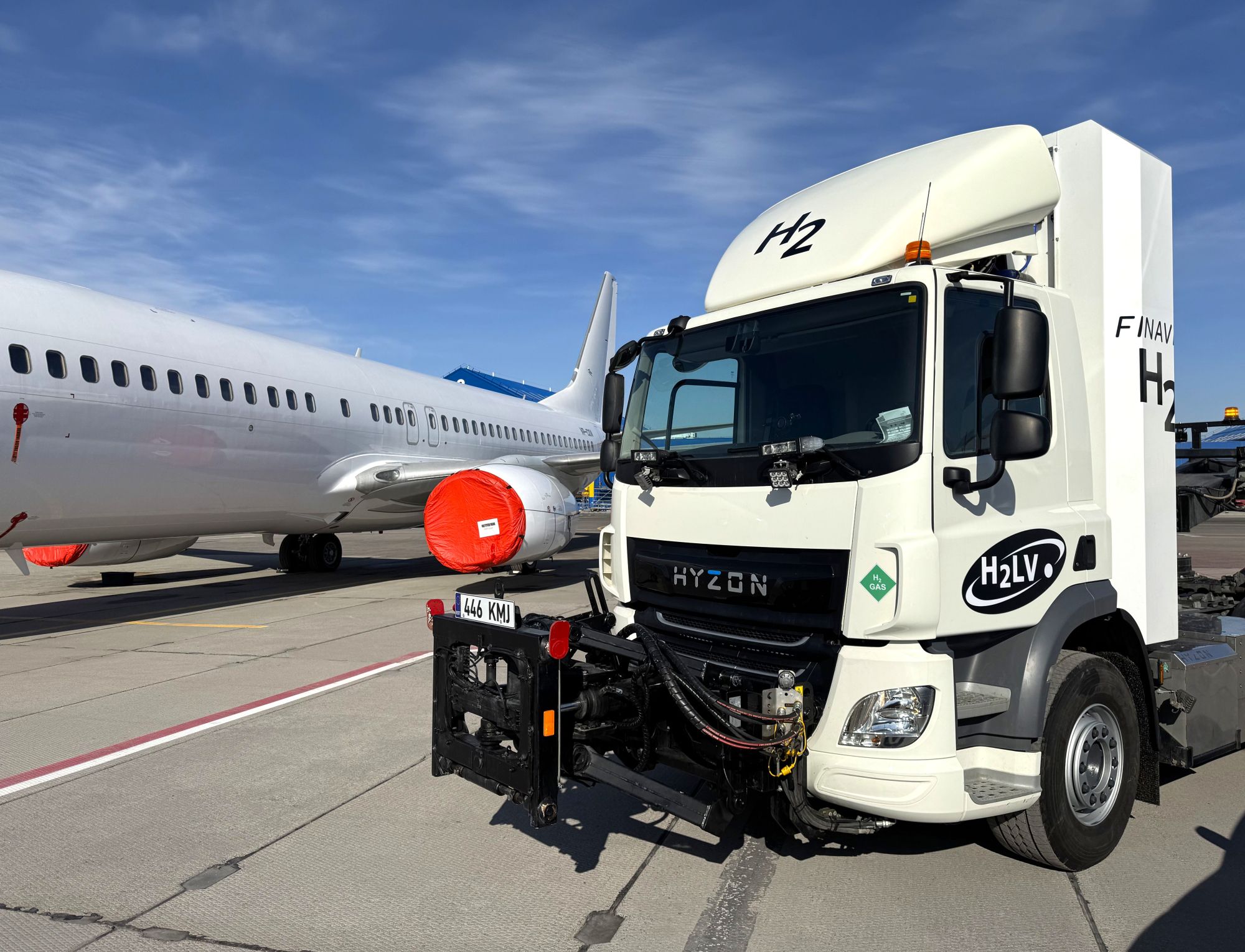
Last week, employees and passengers at Kaunas Airport had the chance to see a remarkable vehicle – a hydrogen-powered Hyzon truck. The heavy-duty vehicle maneuvered across the apron without emitting a single gram of CO₂ and handled its tasks with ease. Kaunas Airport is participating in a European Union–funded project aimed at promoting the use of more sustainable fuel – hydrogen – across various types of airport equipment, including specialized vehicles. According to Modestas Alekna, Head of Sustainable Aviation Projects at Lithuanian Airports (LTOU), similar testing is taking place at airports in Helsinki, Riga, and Tallinn, highlighting the region’s openness to innovations and technologies associated with major sustainability shifts in the transport sector. “Ground transport is just as important to airport operations as aircraft. We are active contributors to sustainability-driven change and have embedded green transition goals into our long-term strategy. Green hydrogen is considered a fuel of the future – a clean energy source closely linked to many key renewable energy projects. Testing hydrogen-powered transport, along with the entire Interreg Baltic Sea Region BSR HyAirport project, provides us with valuable experience,” said M. Alekna. The hydrogen-powered Hyzon truck was brought to Kaunas following a pre-prepared testing plan. Specialists operating the 10-ton vehicle confirmed it could be used on the apron, runway and taxiways to remove snow and dust, as well as perform other surface maintenance tasks. According to M. Alekna, hydrogen-powered transport has never before been tested at Lithuanian Airports. Kaunas Airport was chosen due to lower aircraft traffic and suitable space for such trials. The initial goal was to cover around 100 kilometres while carrying out standard apron and runway cleaning tasks, so testing lasted several days. Test locations were selected to ensure that, if the Hyzon vehicle stopped operating, it would not disrupt airport activities. During the trials, the truck operated smoothly and left a positive impression on the specialists. In addition, the mass-produced Toyota Mirai passenger car, also powered entirely by hydrogen, was successfully tested at Kaunas Airport. According to LTOU, only four such vehicles are currently registered in Lithuania. The Toyota Mirai used in the tests was provided by the Latvian Hydrogen Association, which also supplied hydrogen and a refuelling station. The project partner, the Latvian Hydrogen Association, ensured that only fully green hydrogen was used during the tests at Kaunas Airport, a clean fuel that enables zero CO2 emissions when used in vehicles. “Through electrolysis, water molecules are split into oxygen and hydrogen. When electricity generated from solar and wind energy is used in this process, it does not pollute the environment. In other words, such hydrogen is a versatile energy carrier that helps protect the environment,” said M. Alekna, Head of Sustainable Aviation Projects at LTOU. LTOU aims to become a CO2-neutral organisation by 2030. In the European Union’s hydrogen strategy for a climate-neutral Europe, hydrogen plays a key role in achieving climate neutrality by 2050.
2026 03 18
More
Kaunas Airport tests hydrogen-powered truck
airBaltic to Increase Frequencies on Key Routes from Lithuania in Summer 2026
News
airBaltic to Increase Frequencies on Key Routes from Lithuania in Summer 2026
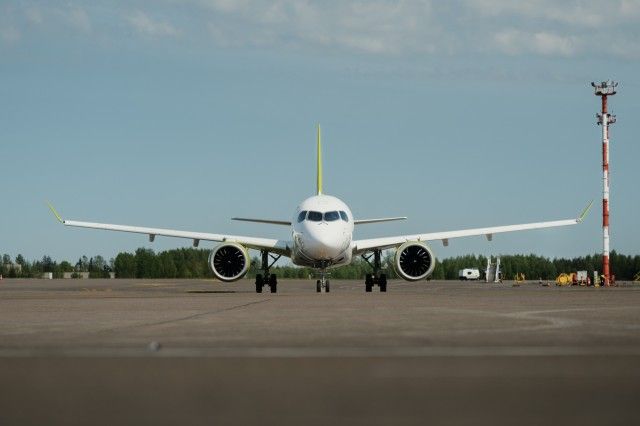
The Latvian airline airBaltic will further strengthen its operations in Lithuania for the upcoming summer season 2026 by increasing flight frequencies on several important routes from Vilnius, Kaunas, and Palanga. These improvements reflect rising demand for direct and convenient travel options, supporting stronger connectivity across Europe and beyond for passengers in Lithuania. Next summer, airBaltic will increase frequencies on a number of strategically important routes from Vilnius Airport. Among the key improvements are; Paris (France) increasing from from 5 to 6 weekly flights; Munich (Germany), from 6 to 8; Prague (Czech Republic) and Berlin (Germany) from 2 to 3 weekly services. Additional increases include Malaga (Spain, from 1 to 2 weekly), Nice (France, from 1 to 2 weekly) and Palma de Mallorca (Spain, from 1 to 2 weekly), supporting the growing demand for seasonal leisure travel. Meanwhile, the Palanga–Riga connection will continue to provide reliable access to the wider airBaltic route map, reinforced by improved schedule stability. Mantas Vrubliauskas, Vice President Network Management of airBaltic: “By increasing frequencies on several important routes from Lithuania, we are strengthening our long-term commitment to ensure stable and forward-looking connectivity across the Baltic States. These enhancements, together with a significant seat capacity increase next summer – 21% in Lithuanian market – will improve access to Europe, provide more flexibility for travelers, and support the region’s competitiveness as a whole. The summer 2026 schedule clearly reflects rising demand from Lithuania for reliable and convenient travel options, and our focus remains on meeting that demand through consistent network development.” These frequency increases complement the previously announced new routes for Lithuania, including Vilnius–Zurich and Vilnius–Chisinau, as well as the Kaunas–Riga route, which will operate 5 times per week and provide Lithuanian travelers with seamless one-stop connectivity via Riga on the modern Airbus A220-300 fleet equipped with free, high-speed SpaceX Starlink internet. In total, during the summer 2026 season, airBaltic will connect Vilnius, Kaunas, and Palanga to more than 20 direct destinations, while also offering smooth onward connections to over 80 destinations across its wider network. Across all its bases, airBaltic will operate over 110 routes next summer, continuing its steady expansion and reinforcing its role as the leading airline in the Baltic region. Over the past 30 years, airBaltic has evolved into a globally respected carrier. Now the airline is connecting the Baltic States to 80 destinations across Europe, the Middle East, North Africa, and the Caucasus region, providing essential infrastructure and global connectivity for the region. A complete schedule of airBaltic flights and tickets are available on the company's homepage at www.airbaltic.com
2025 12 17
More
airBaltic to Increase Frequencies on Key Routes from Lithuania in Summer 2026
“Join UP! Baltic” will operate charter holiday flights to Egypt from Kaunas Airport
News
“Join UP! Baltic” will operate charter holiday flights to Egypt from Kaunas Airport
As Belarus continues its hybrid attack against Lithuania, during which airspace restrictions are imposed on some nights and operations at Vilnius Airport are disrupted, the tour operator Join UP! Baltic, together with Lithuanian Airports (LTOU), has agreed to relocate charter flights on two routes from Vilnius to Kaunas Airport. In this way, LTOU and its partners aim to adapt to the current challenges and continue flight operations. It is reported that flights organized by Join UP! Baltic to Sharm El Sheikh and Hurghada (Egypt) will be operated from Kaunas Airport starting on December 17. These flights from Kaunas Airport are expected to continue until the end of March 2026. In the near future, Join UP! Baltic will directly provide its clients with all necessary information regarding the relocation of flights. Passengers may also contact the tour operator themselves regarding the organization of these flights. Representatives of LTOU state that a solution has been found together with the tour operator that will help minimize the risk of inconvenience for passengers using the currently night-time charter flights from Vilnius Airport due to unplanned airspace restrictions. “Unfortunately, the recurring closure of airspace over the airport recently caused by balloon activity does not allow us to ensure the level of service quality we strive for. These circumstances cause not only significant inconvenience to our travelers, but also a chain reaction that disrupts flight programs from other cities as well. This is not an easy decision, but it is necessary to protect our travelers’ holidays and ensure that flights operate on time. For the peace of mind of our travelers, we are committed to doing everything possible so that their holiday plans do not change. We understand that travelers may have questions, so during this transitional period our team is ready to assist them. We will ensure that all passengers receive timely information and the necessary support. Our commitment to providing high-quality services remains our top priority, especially during the holiday season,” says Aurimas Janušauskas, CEO of Join UP! Baltic.
2025 12 12
More
“Join UP! Baltic” will operate charter holiday flights to Egypt from Kaunas Airport
Passenger Traffic Grew at Lithuanian Airports in November
News
Passenger Traffic Grew at Lithuanian Airports in November
2025 12 03
More
Passenger Traffic Grew at Lithuanian Airports in November
Where to fly for skiing and what to pack? A few tips and a destination map to help
News
Where to fly for skiing and what to pack? A few tips and a destination map to help
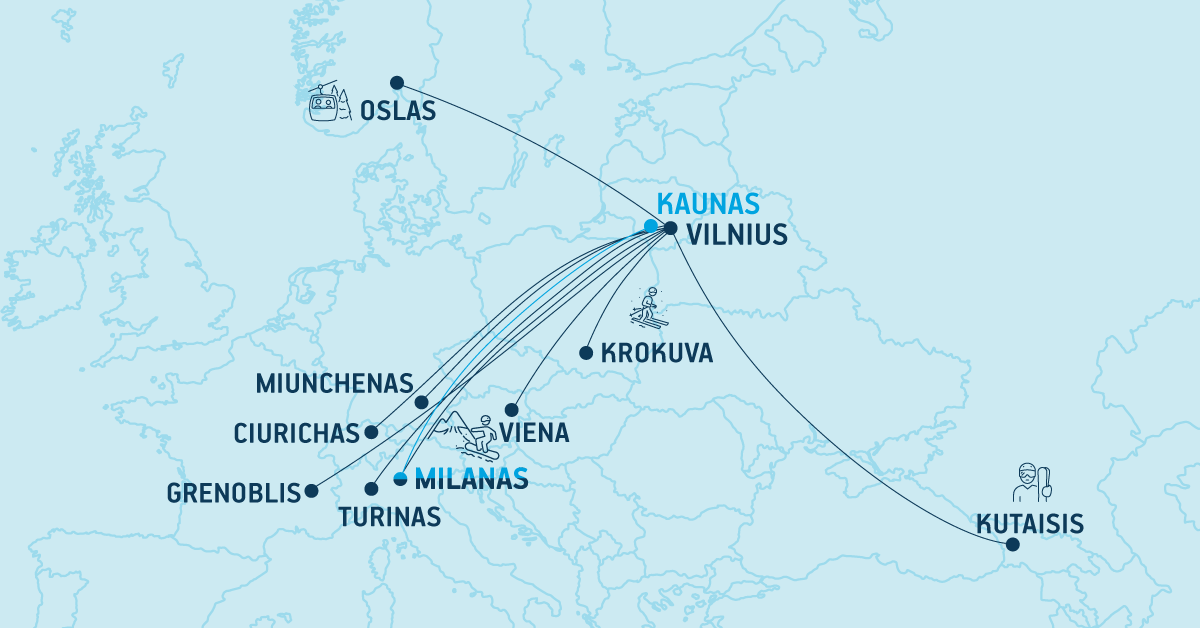
Winter may prove too short to try all the European ski resorts that can be reached from Lithuanian airports. While experienced skiers debate which Alpine slopes offer the most adrenaline and enjoyment, the destination map also invites travelers who have decided to ski for the first time to discover winter activities. For them in particular, a few good tips will come in handy. With the start of the winter aviation season, the Alps become a magnet for skiing enthusiasts. Switzerland, Austria, Italy, and France open their mountain resorts. Georgia also welcomes guests, offering activities in the Caucasus Mountains, while Lithuanians fly to southern Poland because traveling to towns in the Tatra Mountains is much faster, more convenient, and shorter than going by car. Norway, still largely undiscovered by Lithuanian skiers, also invites visitors to try its cozy Nordic resorts. Thus, in winter, every traveler from Lithuania can find suitable slopes and a preferred level of comfort somewhere in Europe. Lithuanian Airports have compiled a list of destinations with popular ski resorts that are conveniently accessible from major city airports, which are regularly served from Lithuania by airlines such as airBaltic, Austrian Airlines, Norwegian, Ryanair, SWISS, and Wizz Air. Meanwhile, travelers who enjoy skiing have shared practical tips that will be useful for those planning such holidays for the first time. Most travelers say it is advisable to rent ski equipment at the resort—local specialists will help select the best gear according to a person’s weight and height. Rental points offer all essential equipment: skis or a snowboard, poles, boots, and a helmet. Special attention should be paid to ski boots: they must ensure maximum comfort—neither too loose nor too tight. Boots should create a unified feel with the equipment; otherwise, controlling movements and mastering technique will be difficult. If after the first day the equipment feels uncomfortable, rental shops usually replace it with a more suitable option at no extra charge. Clothing is just as important. When skiing, it is recommended to dress in layers so that body temperature can be easily regulated by removing a top layer if needed. The first layer consists of thermal underwear worn next to the body (a long-sleeved top and leggings). The second layer is fleece (a warm, lightweight synthetic sweater or hoodie). Special ski socks, long enough to reach the knees, are also essential. Outerwear (a jacket and trousers) must be waterproof, windproof, and allow free movement. Be sure to pack comfortable, waterproof gloves, a balaclava or hat, and neck protection, as well as sun protection: ski goggles with shatterproof lenses, face cream, and lip balm with a high SPF. To protect the body from impacts, it is worth using special protective gear for the wrists, knees, and hips. These should be comfortable and not restrict movement. Although protective gear can often be rented together with equipment, for maximum comfort and a better fit it is recommended to purchase personal protective gear in advance and pack it in your suitcase. Instructors warn that after the first days of skiing, be prepared for significant muscle soreness. Magnesium supplements are recommended to help relax muscles and reduce discomfort. Do not forget to bring a swimsuit and flip-flops, as swimming pools and saunas operate in most resorts—helping you relax and recover. Preparing for a winter holiday is simple. Once you know what to pack, all that remains is to explore resorts and choose a flight. Milan, reachable by direct flights from Vilnius and Kaunas in under three hours, opens the gateway to a skiing classic—the Italian Alps. Just an hour and a half from the city lies Piani di Bobbio, a cozy resort ideal for first descents. For a wider choice of slopes, it is worth traveling a bit further toward the Swiss border—there, at the foot of the Monte Rosa massif, a resort connecting three ski areas offers a broad range of runs and spectacular mountain views, including the 4,634-meter Dufourspitze. Travel guides remind that in February 2026 Milan and its surroundings will be immersed in the spirit of the Olympic Games. This major event will attract large numbers of visitors and may affect typical ski holiday plans. Travel experts therefore note that accommodation demand in nearby mountain resorts, such as Cortina d’Ampezzo in the Dolomites, will be higher, along with prices. It is advised to book accommodation, ski passes, and equipment in advance. Traffic intensity and congestion in Milan and near Olympic venues are also expected to increase. On the other hand, the Olympic Games provide a unique opportunity to combine skiing with world-class sporting events and cultural activities. Another strategically excellent starting point for Italian winter holidays is Turin, which hosted the Winter Olympic Games in 2006. One of the most convenient and closest ski destinations is the resort of Bardonecchia, reachable in just an hour and a half by car, as well as easily accessible by direct train. Traveling a bit further west from Turin leads to the well-known resorts of Sestriere and Sauze d’Oulx, which are part of the famous Via Lattea ski area and offer more than 400 kilometers of interconnected slopes. Another former Winter Olympic host city, Grenoble (1968), is also reachable by direct flight from Vilnius. The French call it the capital of the Alps. Grenoble is the largest city located in the Alpine region and is surrounded by three mountain massifs, making ski resorts exceptionally easy to reach. In less than an hour, travelers can get to resorts such as Chamrousse and Les Sept Laux, which offer modern lifts and a wide selection of slopes. Due to their proximity and accessibility, this region is especially suitable for first-time skiers who want to stay close to a major city. Zurich is another large city, this time in Switzerland. It offers rich urban experiences and serves as a convenient gateway for skiers traveling to modern Swiss resorts that aim to set high standards and attract an elite clientele. Just an hour northeast of Zurich lies the Flumserberg resort, which offers many slopes well suited for beginners. To the southeast is the famous Davos resort, known for its high Alpine peaks and spectacular scenery, and easily reachable by direct train from Zurich. Younger travelers are particularly drawn to Laax, which is renowned for its snow parks and snowboard-friendly slopes. Austria’s capital Vienna is just a two-hour direct flight from Vilnius. In winter, the city, scented with coffee and strudel, attracts tourists not only to Christmas markets but also to skiing opportunities. Just an hour and a half away by car or train are popular resorts such as Semmering Hirschenkogel and Stuhleck. Entire winter sports complexes offer a variety of slopes, night skiing options, and even dedicated toboggan runs. Many visitors arrive at Austrian ski resorts via Munich. This southern German city in Bavaria is easily accessible from Vilnius by direct flight. Munich lies only about one to two hours by car or bus from many ski resorts, some of which are located in neighboring Austria. Both locals and visitors make convenient use of special daily ski buses that can take them, for example, to the SkiWelt area—going in the morning and returning to the city in the evening. Munich offers a wide range of hotels, restaurants, and services, making the combination of city life and mountain skiing particularly appealing. Popular nearby resorts include the German resorts of Garmisch-Partenkirchen, Oberstdorf, and Mittenwald, as well as the Austrian resorts of Kitzbühel and the SkiWelt network in the Kaiser-Brixental region. Poland, increasingly popular among Lithuanian travelers, is also very active in winter. Direct flights to Kraków open not only the treasures of this historic royal city but also routes onward to the Tatra Mountains, the highest part of the Carpathians. Travelers who have already flown from Vilnius say that the areas around Zakopane, south of Kraków, can be a true winter discovery. Resorts such as Białka Tatrzańska, Jurgów, and other nearby towns offer convenient skiing infrastructure and family-friendly options. Georgia always welcomes visitors from Lithuania with exceptional hospitality. A flight to Kutaisi marks the beginning of the holiday, and within a couple of hours travelers can reach Bakuriani—a modernized resort with many green and blue slopes, ideal for beginners and families. Those seeking to avoid crowds can travel deeper into the mountains to Goderdzi, a quiet, locally favored resort where natural snow and mountain silence create an authentic Caucasian winter experience. In winter, Norway looks like a postcard from a fairy tale, where snow falls silently and mountains feel incredibly close. A flight to Oslo and a few hours of travel bring visitors to Trysil or Hemsedal—majestic resorts with excellent slopes and exemplary infrastructure. Everything here is well thought out, from modern lifts to cozy mountain cabins where hot chocolate steams after a day on the slopes. Just two hours by train from the capital lies Lillehammer, the northernmost city ever to host the Olympic Games, a name remembered not only by sports fans but also by lovers of crime TV series. Those who choose to fly from Lithuania to Bergen are usually travelers for whom mountains are not only about sport but also about a symphony of nature. From Bergen, it takes about two hours to reach Voss, a small yet charming resort where snow meets the mist of fjords. Thus, the Norwegian dilemma emerges: Bergen offers more poetic landscapes, tranquility, and natural beauty, while Oslo is more convenient for those seeking professional skiing, speed, and adrenaline.
2025 11 28
More
Where to fly for skiing and what to pack? A few tips and a destination map to help
All news
Services
All services
Shops and restaurants
Shops and restaurants
More
Shops and restaurants
Hotel
Hotel
More
Hotel
Internet at the airport
Internet at the airport
More
Internet at the airport
Baggage wrapping and documents printing
Baggage wrapping and documents printing
More
Baggage wrapping and documents printing
Ticket desks
Ticket desks
More
Ticket desks
Tax refund
Tax refund
More
Tax refund
ATMs
ATMs
More
ATMs
All services